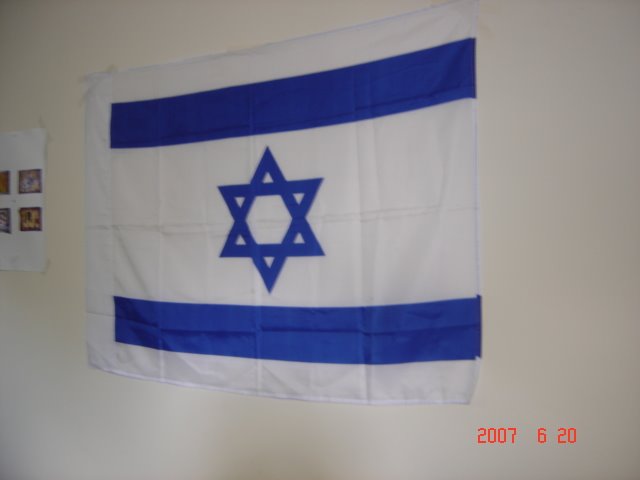
Dear Mr Haniyeh, Dear Mr Olmert….
Shabbat Vayiggash – 3rd January, 2008
Dear Mr Haniyeh
I write to you because you are one of the heads of Hamas in Gaza. Of course, I know you only by reputation. By now, I imagine you are in hiding, fearing assassination by an Israeli Air Force bombing, one of the bombs that has killed over four hundred Palestinians in Gaza in the last week and injured over a thousand, including many of your own security forces, as well as police officers and innocent civilians who have been caught up in this aerial bombardment of the narrow strip of land that lies between Israel and Egypt. As I write this, the papers report the story of five young daughters in one family, all killed by Israel ’s Air Force. The mother’s tears course down her face stained with grief; a surviving infant sits bewildered on her lap, the lacerations of her face covered in a bandage. Are you going to come out of hiding and sit with this broken mother to demonstrate your compassion for her tragedy? Or are you going to remain holed-up in your bunker until this terrible episode comes to an end and then re-emerge to fuel the hatred of your population against what you call the ‘Zionist regime’? Your people have been through too much – one and a half million Palestinians live cheek by jowl in Gaza, families of six or seven in small, fragile structures which they call home. Gaza’s infrastructure – insofar as it exists – is crumbling. Fuel, water, sanitation services, medicine, provisions of food, money – none of this is available any longer to your people. They are trapped inside the closed borders of what they want to call their country. But in truth, your country, Gaza, is a pit. It is true that you were elected democratically by the people of Gaza– it was something of a surprise although it was no secret that many perceived the previous ruling party, Fatah, as corrupt and ineffective. And what did you hope to achieve for them, yes your people, the thousands upon thousands of impoverished families with no money, no food, no fuel, no water, no paper, no shoes, no teacups, by batting your rockets into southern Israel day after wretched day, and terrorising the inhabitants of the Western Negev? Did you think that would help your people? Did you think your party, Hamas, could match the strength of the Israeli Army – an army and Air Force that seems to have no limit to its strength? I think you must have known that Israel’s patience would come to an end at some point, that the voices of the Quartet crying for restraint and cease-fire would no longer be heeded. How long would your neighbour, the Samson of the Middle East restrain himself from war? Don’t you know how the story ends, or did you deliberately goad this eyeless hero to break out of his chains and bring down your temples in Gaza? Perhaps you were shocked that Israel let you have it on Shabbat morning – Shabbat Mikketz. Do you know what that word means in Hebrew? Mikketz - ‘At the end of…’ At the end of what? At the end of your aggressive taunting of Israel? At the end of those weeks of siege by your enemy, the Zionist regime? At the end of the so-called ceasefire which had been broken again and again on both sides?
Do you really think that you can obliterate the Israeli State by lobbing your bombs into schoolrooms and homes in Israel? What would it cost you to come to the table and talk? What would it take for you to think about recognising the simple fact that the Jewish people have as much right to a State as the Palestinians have? Think for a moment: if you were to take that step of declaring the truce you say you might entertain. Can you do that? Can you imagine what it would be like to stop hating Israel for just three seconds? Can you think about building up your own State with money from the European Union, from America, even from Israel? What about your so-called friends, the Arab League? What if they could dip into their treasuries and offer you something to help your people? Could you let go of your pride and your deep and searing contempt for Israel for one moment and so allow your people a glimpse of what their independence might be like? Why not think about giving them peace from the terrible, tragic, unnecessary ordeal that they are going through right now?
Yours in despair…
Rabbi Alexandra Wright
Thursday, January 08, 2009
Parshas Vayechi
Parshas Vayechi
Summary of The Weekly Torah Reading:
| Note: The Shabbos Torah Reading is divided into 7 sections. Each section is called an Aliya [literally: Go up] since for each Aliya, one person "goes up" to make a bracha [blessing] on the Torah Reading.
| |
Parsha Summary, Copyright © 2009 by Rabbi Aron Tendler and Torah.org. |


Viva Eretz Israel só dos Judeus.
Se calhar também há uma Espanha e um Pais Basco e uma Galiza, uma França e uma Bretanha e uma Córsega, ou uma América e um Texas ou uma Inglaterra e uma Escócia ou até uma Argélia e uma Cabíria..
Viva Eretz Israel só dos Judeus.
MB
ANDRE MOSHE PEREIRA
PRESIDENTE OR AHAYIM
UNA TRAGEDIA EVITABLE
Porisrael.org Dori Lustron
UNA TRAGEDIA EVITABLE
Ana Jerozolimski
Semanario Hebreo. Uruguay
Editorial
Nunca nos gustó la combinación de palabras "ganar la guerra" . Es difícil usarlas juntas, cuando se sabe cuánto sufrimiento hay de por medio, cuántos inocentes pagan con su vida por pecados que no ellos cometieron...cuánta muerte es el resumen de los días de combate.
Pero especialmente lamentable es cuando todo eso podría haber sido evitado. Como en la guerra actual, entre Hamas e Israel, una guerra que Israel trató durante ocho años de esquivar. Se contuvo, aguantó, intentó frustrar los disparos en forma muy puntual, hubo hasta épocas en las que ni siquiera respondió con fuego hacia los lanzacohetes captados en los radares y las cámaras, tiempos en los que la orden era sólo responder hacia zonas abiertas, aunque hayan disparado desde un barrio poblado, para no arriesgarse a provocar una escalada.
Hasta que no pudo más. Hasta que decidió que no puede seguir cruzado de brazos, sin tratar de poner fin a la amenaza llegada desde Gaza.
Pero aún así, muchas tragedias se podrían haber evitado, especialmente la muerte de centenares de civiles palestinos durante los ataques contra blancos de Hamas.
La terrible muerte de civiles, entre ellos no pocos niños , no habría ocurrido de no ser porque Hamas, intencionalmente, coloca depósitos de armas, explosivos y misiles, en casas particulares y en mezquitas, laboratorios de explosivos en universidades, túneles subterráneos y bunkers en sitios llenos de civiles.
A ello se agrega el hecho que desde sitios esencialmente civiles, que deberían ser refugio seguro y no sitio de combate, disparan sus cohetes dirigidos contra la población civil israelí. Lo hacen o para complicar la reacción israelí, sabiendo que al captar que se trata de una mezquita o una escuela Israel trata de no reaccionar, o para intentar atraer de todos modos una respuesta y poder presentarla después como un ataque contra un sitio que debería ser dejado fuera de la línea de fuego.
Hay filmaciones captadas por aviones sin piloto israelíes, que lo demuestran. Como la de una gran mezquita de Gaza que Israel al fin atacó por el gran depósito de explosivos y misiles que tenía en su interior. Se ven las explosiones secundarias desatadas después de la inicial del lanzamiento de la bomba, producto por cierto de todo lo que estaba guardado allí dentro.
Y está la filmación captada el 27 de octubre del 2007 en la escuela de varones de UNRWA (la agencia de la ONU para los refugiados), de cuyo patio terroristas disparan varios cohetes.
Y están los resultados de la investigación del ejército tras la terrible tragedia del martes en Jebalia, al norte de Gaza, donde una escuela de la ONU fue atacada por Israel, provocando entre 30 y 40 muertos. El ejército fue terminante: desde allí dispararon hacia Israel. Cuando Israel respondió al fuego-y no está claro si sabía siquiera que había civiles refugiándose en el edificio- impactó en la escuela . Israel estima que terroristas , quizás los mismos que lanzaron desde allí el misil, colocaron numerosos explosivos en el lugar, a pesar de que había allí tantos civiles. Las explosiones secundarias que se registraron en la escuela, según Israel, serían la confirmación de que eso fue lo detonado y hasta lo que mató a parte de la gente.
Israel no quería esas víctimas civiles. Claro, difícilmente alguien en el pueblo palestino le crea ahora. Probablemente no le crean tampoco en la Familia Balusha que perdió a varias de sus hijas cuando un proyectil cayó cerca de su casa. Ni los de una familia en El Bureij que perdió a todos sus hijos y varios casos terribles más donde hubo verdaderas tragedias humanas, que nadie en Israel celebra.
Pero en realidad...quizás sí le puedan creer aquellos palestinos que aunque no puedan reconocerlo abiertamente, saben de cerca lo que es Hamas. Le pueden creer todos aquellos palestinos que aunque tengan críticas a Israel, son conscientes de que lo que Hamas ha hecho con su pueblo, no es tratar de protegerlo de una agresión vecina, sino de usarlo y exponerlo para implementar su ideología.
Quizás le puedan creer, a pesar del natural sufrimiento de muchos civiles palestinos hoy en Gaza, todos aquellos que el 27 de febrero del 2008 estuvieron presentes en el estadio de Gaza cuando uno de los líderes de Hamas, Fathi Hammad dijo, como motivo de orgullo, que "nosotros deseamos la muerte, como ustedes (los israelíes) desean la vida".
Claro que fue más explícito todavía y entró en detalles. Elogiando la práctica de los escudos humanos utilizados por Hamas, Hammad dijo abiertamente: "Los enemigos de Alá no saben que el pueblo palestino ha desarrollado sus métodos de morir y de buscar la muerte. Para el pueblo palestino, la muerte se ha convertido en una industria en la que muestran excelencia las mujeres , al igual que todos aquellos que viven en esta tierra.
Los mayores también, lo mismo los combatientes jihadistas y los niños.
Esta es la razón por la que han formado escudos humanos de las mujeres, los niños, los ancianos y los combatientes jihadistas , para desafiar a la maquinaria sionista del bombardeo".
Puede confundir y hasta sonar "loable": si Israel viene a bombardear, pues el pueblo defiende.
Pero Israel no viene a bombardear nada que no sea usado por el terrorismo. Los cobardes terroristas de Hamas, conscientes de ello, llaman a mujeres y niños a subir a los techos. O sea, los llaman por altavoces desde las mezquitas, pero hay testimonios de imposición por las armas, obligando a no pocos a subir.
Nizar Rayyan, el jefe en la zona de Jebaliya que fue eliminado por Israel hace varios días, había sido el primero en defender el tema de los escudos humanos. Así se lo presentó con orgullo en un sitio de Internet palestino favorable a Hamas.
Quizás le crean a Israel, aunque estén también enojados con esta guerra, los médicos del hospital Shifa y otros hospitales de Gaza, que saben que andan hombres armados de Hamas entre sus corredores, haciéndose pasar por personal de salud. O los funcionarios locales de organizaciones humanitarias que ven cómo enmascarados de Hamas detienen los camiones con ayuda de alimentos y remedios que entran a Gaza, se llevan lo que quieran y después nadie sabe adónde fue a parar lo que Israel dijo que entró a la Franja. Lo han denunciado en Egipto, en Jordania, en la Autoridad Palestina...pero dentro de Gaza, nadie puede hablar.
O los encargados de manejar la terminal de combustible de Najal Oz, del lado palestino, que sabe de la cantidad de litros pasados por Israel, que Hamas se robó.
O aquellos palestinos que saben que los jefes máximos de Hamas, que saben llamar a guerra santa, están escondidos en un bunker debajo del hospital Shifa de Gaza. Pero no pueden hablar....porque van muertos.
Reenvia: www.porisrael.org
PARA UNA HASBARA EFECTIVA
JUNTOS SOMOS MAS
Parshas Vayechi
Parshas Vayechi
Yaakov's Blessings
| Ya’akov called for his sons and said, “Gather yourselves and I will tell you what will happen to you at the end of days. Assemble yourselves together and listen, O sons of Ya’akov. Listen to Israel your father.” (Bereishis 49:1-2) And, gather and listen they did. But, speak about the End-of-Days, he did not. Rather, in the end, Ya’akov Avinu skipped over that thorny issue, and went right to the blessings themselves. If you feel cheated of such interesting, and perhaps, life-saving information, imagine how Ya’akov’s sons felt, especially since it was the result of God’s denying Ya’akov the prophecy to tell, implying a lack of worthiness of Yosef’s brothers. To clarify the matter, and to show how this week’s parsha is the basis for the fast day of Asara b’Teves this week, we must consider the following dialogue: “Perhaps, God forbid, there is something unfit from my bed (i.e., a spiritually unworthy child), just as Yishmael was born to Avraham, and Eisav to my father Yitzchak?” His sons answered, “Shema Yisroel, Hashem Elokeinu, Hashem Echad—Just as in your heart only [God is] One, so too in our hearts, there is only One.” At that moment Ya’akov said, “Boruch Shem kevod Malchuso l’olam vaed— Blessed is the Name of His glorious kingdom forever!” (Pesachim 56a) An unusual dialogue, true, but at least it cleared the brothers of any wrongdoing or spiritual lacking. Or did it? Ya’akov wanted to establish the “Mystery of Unity”[1] below, and composed the 24 letters of, “Blessed be the Name of His glorious kingdom forever”. He didn’t give it 25 letters [like the “Shema”], since the Mishkan— the Tabernacle—had yet to be built. Once the Mishkan was built the first word was completed … With regard to this it says, “God spoke to him from the Appointed Tent, saying …” (Vayikra 1:1),[2] which has 25 letters. (Zohar 2:139b) What did Ya’akov really answer his sons, who had professed their belief in the unity of God? He seems to have been saying, “The unity of which you speak is not complete in your minds, as you proclaim, for had it been complete, the prophecy would not have left me.” Indeed, we see later on that Yosef has to remind them, once again, of their inconsistent manner of dealing with Divine Providence: They ordered [someone] to say to Yosef, “Your father commanded us before his death to say to Yosef, ‘Please forgive the crime of your brothers and their guilt, though they have done evil to you.’ Please forgive the crime of the servants of your father’s God.” Yosef wept when they spoke to him. His brothers also wept, [and] fell before him and said, “We are here to be your slaves.” Yosef said to them, “Don’t be afraid. Am I in place of God?” (Bereishis 50:16-19) Well, of course not. If so, then why did Yosef’s brothers act as if he could take revenge on them, even if God didn’t agree? For, if God did not agree, could Yosef, in fact, have his revenge? Of course not. And, if God wanted the brothers punished for what they had done, could Yosef interfere? Of course not. Hence, Yosef told them, there is no need for any of this, is there? The meaning of this is that He alone, may His Name be blessed, has done everything, does everything, and will do all that will be done, for all created things. This is the yichud[3] of BSKML"V:[4] everything is from His kingdom and the result of His guidance. (Sha’arei Leshem, p. 89) This is what Ya’akov Avinu had answered his sons. It’s not the Shema Yisroel part that I am worried about. I know that you believe in God and that He is one; I know that you take seriously that He made Creation and maintains it every moment of history. What concerns me, however, is how well you have integrated that belief into your everyday lives, how much it is the basis of all that you think, say, and do. You didn’t do so well in Shechem— twice—and now that the prophecy has left me, I have to wonder how you are with it today. It is the Mystery of Faith, and what is it? "God is one, and His Name is one." God is one: "Hear O Israel, the Lord our God, the Lord is one" is one yichud, and BSKML"V is the other yichud, so that His Name can be one. (Sha’arei Leshem, p. 89) For, this is the sod of prophecy. For prophecy to work, the Upper Realm must be connected to the Lower Realm in the minds of men. The water, that is, the prophecy, is in the reservoir, that is, in the world above, but is the pipeline attached to it so that it can flow to the people in the world below? If not, then the prophecy will remain above, as it has, and the people below will continue to thirst for it. This is why, after 1,000 years of prophecy (2448-3448/1313-313 BCE), it ended, 40 years after the Purim miracle. Until that time, some connection between the two worlds had remained, at least in the minds of the leaders of the generations, most notably, Mordechai in the story of Purim: “Do not imagine that you will be able to escape in the king’s palace any more than the rest of the Jews. For if you continue to remain silent at a time like this, relief and salvation will come to the Jews from another place, while you and your father’s house will perish. And, who knows whether it was for such a time as this that you attained the royal position!” (Esther 4:13) However, exile in Babylonia had taken its toll. The people no longer related to Divine Providence on the level they had previously, evident by the fact that many people did not appreciate what Mordechai had done to save the Jewish people, and that most Jews never returned back to Eretz Yisroel after the redemption occurred. Amalek, in this case, Haman, had succeeded, somewhat, in dividing the Name of God in the minds of many Jews. The truth is, that is really what the destruction of the Temple in 3338/4 23 BCE represented, the “snapping” of the connection between Heaven and Earth, between the Temple above and the Temple below. Already, in advance of the exile to Bavel, more and more of the Jewish people begun to live lives that contradicted their belief in God, that He sees everything, pays attention to everything, and cares about all of it. In other words, though the people at the end of the First Temple Period may have believed that God overtly runs the world, what we call “Hashgocha Pratis,” they lived as if He only runs it covertly, that is, through nature alone, except for the occasional miracle here and there. This level of Divine Providence is called, “Hashgocha Klallis,” or “General Divine Providence,” and it “runs” the world outside of Eretz Yisroel. Hence, for intellectually exiling themselves from the Providence of Eretz Yisroel to that of the Diaspora, measure-for-measure, they were eventually exiled, physically, from Eretz Yisroel to Bavel. It is a word that means “confound,” and it was a remembrance of the tower once built by mankind to challenge the Providence of God in everyday life. Every physical exile begins with a spiritual one. After that, it was only a matter of time until the unthinkable occurred: the destruction of the Temple, on Tisha B’Av, 3338/423 BCE. The event was so profound and final that many Jews thought it represented the permanent severance of the relationship between Heaven and Earth, between God and the Jewish people, forever. The prophet Yeshayahu had to assure them that this had not been the case, just that, like an errant spouse, they had been pushed out for a time. And, why on Tisha B’Av specifically? Because, that is day that the Spies of Moshe Rabbeinu’s time came back from their mission, and convinced the people not to go up the land (Ta’anis 29a). Acting as if God couldn’t even hear what they were saying, they told the people: They brought an evil report of the land which they had spied to the Children of Israel, saying, “The land which we spied is a land that consumes its inhabitants and all the people that we saw there were of great stature. We saw giants, sons of Anak, who come from giants. If in our eyes we were like grasshoppers, then certainly we were the same in their eyes!” (Bamidbar 13:32-33) And, the root of the Spies’ inability to unify the upper and lower realms? The tribes themselves, as the Arizal explains (Sha’ar HaGilgulim, Ch. 36). This is why, the Arizal revealed, Yosef called his brothers, “Spies!” as they stood before him in search of food during the famine (Bereishis ?4?2:8). He was warning them: If you don’t learn to unify the upper and lower realms now, then your descendants will be unable to do so later, causing exile to themselves and the rest of the nation. What about today? It is pretty much the same thing. Jews talk about God’s control over Creation, and His involvement in history. However, their lives do not necessarily reflect this belief, as they fail to trust God as much as their belief dictates they ought to. Furthermore, many speak badly about Eretz Yisroel and the idea of making aliyah, perpetuating the sin of the Spies, without any remorse. They simply ignore the Hashgocha Pratis behind all that is happening, and has been happening until today. The fast days of Asara b’Teves is a good day to contemplate just how damaging such a perspective can be. But, it won’t exist for much longer. For, the events about which Ya’akov Avinu wanted to tell his sons at the beginning of our history are starting to tell us about themselves now, at the end of days. The upper realm of Yud- Heh is beginning to join up with the lower realm of Vav-Heh, ending the damage of thousands of years of exposure to Amalekian thinking (Rashi, Shemos 17:16). The involvement of God in the affairs of man is becoming increasingly more prevalent, and difficult to deny. [1] A Kabbalistic concept referring to the supernatural revelation of God to mankind, which will occur during the days of Moshiach. Then, just as God is revealed in the world above, His reality will be clear to man below as well, unifying both the upper and lower realms. [2] That is, the last part of the first verse of Vayikra, in reference to the Mishkan, has 25 letters. According to the Zohar, once the Mishkan was completed the spiritual root of the light to which the second verse of the Shema alludes was able to emanate its light and draw down the Divine unity that Ya’akov intended to cause. This is why the Mishkan was completed on the twenty-fifth day of Kislev. Furthermore, says the Zohar, this is why thirteen materials were used for the Mishkan, and twelve stones were put into the Ephod—to make a total of 25, alluding to the sublime unity that was to be achieved. [3] Unification. [4] The roshei teivos of Boruch Shem kevod Malchuso l’olam va-ed, formed by combining the first letter of each word. |
| Perceptions, Copyright © 2009 by Rabbi Pinchas Winston and Torah.org. |
Jana Beris
Porisrael.org Dori Lustron
En Cisjordania, una realidad diferente
Jana BerisPara LA NACION
Jueves 8 de enero de 2009
En el territorio gobernado por Al-Fatah, rival de Hamas, se logró controlar al extremismo
JERUSALEN.- Hace algunos días, desde Damasco, el jefe del Departamento Político de Hamas, Khaled Mashaal, exhortó a los palestinos a "lanzar la tercera intifada" para protestar "contra la agresión israelí en Gaza". El llamado estaba dirigido especialmente a los habitantes de Cisjordania, que ven la guerra por televisión. La intifada no estalló.
En la plaza Manara, en Ramallah, cientos de personas se reunieron para protestar y condenar a Israel, pero no era una multitud como las conocidas en otros tiempos. Los cafés que rodean la plaza no cerraron sus puertas y nadie se declaró en huelga. En Nablus, al norte de Cisjordania, en la manifestación organizada se procuró criticar a Israel y hablar de la unidad palestina sin entrar en detalles.
No es que súbitamente la población palestina de Cisjordania simpatice con Israel, sino que confluyeron otros elementos relacionados con la interna palestina: la abierta hostilidad y enemistad entre Hamas y la Autoridad Nacional Palestina (ANP), bajo la dirección de Al-Fatah, y la fuerte represión a Hamas por parte de las fuerzas de seguridad de la ANP e Israel.
En general, el palestino de Cisjordania mira sin duda con ira los noticieros y critica a Israel. Pero están también aquellos que dirigen un dedo acusador a Hamas por no haber reanudado la tahdia (calma) que expiró el 19 de diciembre pasado. "Acá espero que esté todo tranquilo, que las cosas sigan mejorando como hasta ahora", decía telefónicamente a LA NACION, hace pocas semanas, Adib Hadwe un palestino cristiano de Bet Jallah. "Lo que preocupa es la situación en Gaza, que puede estallar", añadió, en un vaticinio que finalmente se cumplió.
Los grupos radicales en Cisjordania -Hamas y Jihad Islámica principalmente- no han desaparecido, pero están bajo control. En la ANP nadie quiere arriesgarse a que Hamas intente allí lo que logró en junio de 2007 en Gaza, donde tomó el poder por la fuerza.
En la situación actual, la ANP, con sede en Ramallah, no podría volver a Gaza sin ser acusada de "traidora" y "colaboradora con Israel". Pero ello no quita que nadie en la Mukata (palacio de gobierno) esté lamentando hoy el devastador ataque que recibe Hamas.
"Nadie llora en Ramallah" fue el título de una nota de The Jerusalem Post , que consignaba la indiferencia que causó la muerte de Nizar Rayyan, uno de los líderes de Hamas. Cuentan los palestinos que Rayyan había sido quien encabezó a los hombres armados de Hamas que tomaron control de las instalaciones de seguridad de la ANP en Gaza. Meses después, Rayyan amenazó al presidente palestino, Mahmoud Abbas, cuando anunció que "pronto" oraría en la Mukata, en lo que fue interpretado como una advertencia sobre una toma del poder también en Cisjordania.
Esta división profunda entre Hamas y Al-Fatah no desapareció durante el ataque israelí a Gaza, a pesar de que Abbas condenó duramente a Israel y pidió la protección internacional para los palestinos.
Lo que existe entre Al-Fatah y Hamas es más que un conflicto político y de poder. Se trata de formas de vida diferentes: una mentalidad conservadora y más religiosa en la Franja y otra más abierta en Cisjordania. También realidades distintas en los últimos años. Una economía estable en Cisjordania y el continuo deterioro y crisis en Gaza. A pesar de eso, los palestinos dicen que conforman "un solo pueblo" y que la división geográfica no significa que puedan vivir separados. No obstante, la realidad ha mostrado que en los últimos tiempos ya lo hacen.
Dad a Israel una oportunidad...
Dad a Israel una oportunidad... ABC /Gentiuno.com
| |
- Lo verdaderamente sorprendente es que no hubiera sucedido mucho antes. Israel ha aguantado lo inaguantable: más de cuatro mil cohetes palestinos que si no han causado más muertes es en buena medida debido al inmenso esfuerzo realizado en la protección pasiva -en forma de bunkers- de las poblaciones del sur de Israel.
- Exigir un alto en sus operaciones militares a Israel es una inmoralidad así como una gravísimo error estratégico. El objetivo político de la UE y de la comunidad internacional no debe ser un alto el fuego sin más, sino un alto al terrorismo desde Gaza.
- La manipulación mediática a la que nos tienen acostumbrados las facciones palestinas, terroristas o no, de nuevo está en marcha, ofreciendo por doquier las imágenes del sufrimiento de sus gentes, desgraciadamente inevitable en cualquier confrontación bélica. Es tan hábil que hace olvidar el sufrimiento al que los terroristas palestinos tienen sometido a una buena parte de la población israelí. Hasta la retirada completa por parte de Israel de Gaza en 2005, Hamás justificaba los ataques suicidas y por otros medios como un instrumento necesario para luchar «contra la ocupación israelí». Pues bien, desde que Sharon decidiera dejar Gaza a los palestinos, el único israelí en la Franja ha sido el desgraciado soldado Gilad Shalit, secuestrado hace dos años por milicianos de Gaza. Sin embargo, que Israel no fuera ya una «fuerza ocupante» no ha disminuido el ansia de violencia por parte de Hamás y de otros grupos palestinos en Gaza. Por una razón muy sencilla: lo que Hamás quiere no es la solución de dos estados conviviendo pacíficamente uno junto al otro. A lo que aspira el islamismo palestino es a un único estado en la zona, palestino e islamista. Por eso ni quiere ni puede renunciar a su objetivo de eliminar a Israel. Y por eso Israel se ve forzado a defenderse. Si no lo hiciera dejaría de existir simplemente.
- Como en toda guerra no han faltado los corifeos clamando al cielo por la desproporción de la respuesta militar israelí. No sabemos qué propondrían como alternativa, pero lo que sí sabemos es que no sólo la actuación de las fuerzas armadas de Israel, la IDF, está siendo escrupulosa con el derecho de la guerra, sino que, además, está siendo altamente eficaz en la discriminación de sus blancos. Cierto, en toda acción bélica está el riesgo de causar bajas civiles inocentes, pero a tenor de lo que cuentan los observadores sobre el terreno y la sacrosanta institución de las Naciones Unidas, tal vez menos del 10 por ciento de las víctimas podrían ser consideradas como víctimas inocentes. El resto, el 90 por ciento, serían cuadros y milicianos de Hamás. Lo cual quiere decir, entre otra serie de cosas, que la ejecución de los ataques israelíes está mejor preparada que lo que la OTAN hace en Afganistán, por ejemplo, donde la proporción de muertes por error es bastante más alta.
- En suma, a Israel le asiste el derecho para defenderse y lo está haciendo de la mejor forma posible, con justicia, legitimidad y proporción. Mientras que lucha contra los terroristas de Gaza, permite que la ayuda humanitaria fluya hacia los palestinos de la zona. Y hay que recordar que si Gaza es hoy un erial, se debe a la pésima gestión de los líderes de Hamás, mucho más interesados en aterrorizar a los israelíes que en crear oportunidades para sus votantes.
- ¿Por qué sería un error estratégico presionar a Israel para que pare su ofensiva ahora? Por una razón muy sencilla: porque acabar con los arsenales y los cohetes de Hamás no es suficiente y es eso lo que han estado haciendo hasta ahora los bombardeos de la IDF. Fue Douglas MaCarthur quien dijo que «en la guerra no hay sustituto para la victoria». Con la excepción de la derrota, claro. Y si hay una lección que debimos aprender de conflictos inacabados o mal acabados, como la guerra de Israel contra Hizbolá en el verano de 2006, es que la ausencia de una clara, rotunda y visible victoria, esto es, la ausencia de una victoria decisiva, se vuelve rápidamente en una derrota. La supervivencia de Hizbolá entonces se vivió por los suyos y buena parte del mundo árabe como una derrota israelí. Cierto o no es lo de menos. Es la imagen lo que importa.
- Por eso, acabar con los cohetes de Hamás no es suficiente. Hay que sustraerle por completo el sentimiento de victoria y para eso hay que conseguir doblegar su voluntad. Si la comunidad internacional le da esperanzas a los dirigentes de Hamás de que si aguantan un poco, se va a obligar a Israel a parar sus acciones, lo único que se estará haciendo es alimentar su sentimiento de vencedor. Aún peor, se estará patrocinando directamente a los palestinos radicales frente a los moderados, esos con los que sí se puede hablar de una solución pacífica para todos. Si Hamás no sale derrotado políticamente, quien sí lo estará será la Autoridad Palestina, su presidente Abbas y el gobierno de Salam Fayyad. Una no derrota de Hamás le daría alas para intentar en Cisjordania un golpe similar al del 2007 con el que se hicieron con el poder en Gaza. Y eso sí que sería el final de todo proceso de paz. Por el contrario, si Hamás sale claramente derrotado, se abre una nueva oportunidad para que la Autoridad Palestina recobre su papel en la Franja de Gaza, hoy por hoy, de hecho, un estado palestino separado.
- Por último, no podemos olvidar que si bien Israel está luchando para defender la tranquilidad de las poblaciones vecinas a Gaza, la derrota de Hamás no sólo traería nuevas oportunidades para una paz estable en la zona, sino que representaría un grave revés para los designios de Irán en la zona. En ese sentido no podemos olvidar que Israel no sólo está luchando por su seguridad, sino que también lo está haciendo por la nuestra, europeos y occidentales. Pararle los pies a un Irán cada día más crecido, irresponsable, provocador y a las puertas de convertirse en potencia atómica sólo puede ir en beneficio de la paz internacional. Es decir, de nuestra paz y seguridad.
- Por todo ello, la mejor contribución que la UE y la ONU pueden hacer a la paz y la estabilidad en la zona es dejar que Israel alcance sus objetivos. Y eso es tan sencillo y fácil como no buscar y presionar para un alto el fuego prematuro, tal y como se hizo en 2006.
- La presión internacional debe dirigirse en contra de nuestros enemigos, en este caso Hamás, no de nuestros amigos o salvadores. Israel debe sentir nuestro apoyo para que Hamás sienta su aislamiento y se sepa al alcance de los soldados israelíes. Hamás ha sido una desgracia para los palestinos, es el verdadero obstáculo para alcanzar una solución razonable del proceso de paz, y es una pieza más tanto del islamismo radical como de Irán, que juega con sus peones al norte y sur de Israel en su estrategia de hegemonía en el Levante. No hay que pedir contención a Israel, hay que promover que persiga la eliminación militar y política de Hamás. Menos que eso significaría posponer un conflicto de mayores proporciones.
Rafael L. Bardají (*)
- * Rafael L. Bardají, español, es licenciado en Ciencias Políticas y Sociología por la Universidad Complutense de Madrid. Cursó estudios de especialización de seguridad y defensa en Inglaterra y EE UU. Fue subdirector de Investigación y Análisis del Real Instituto Elcano y fundador del Grupo de Estudios Estratégicos (GEES).
Four Days of Action For Israel
Dear Members,
The last week has descended into a nightmare for those living near the border with Gaza, not to mention the innocent civilians in Gaza who are suffering because of the selfishness of their extremist leaders. What ever your feelings on the political angle of this conflict, you cannot help but despair at the cost to innocent lives. All we can say is that we pray for an end to the violence as soon as possible, and that both Israel and Hamas will agree to the terms of the ceasefire proposed by Egypt and France.
Please find attached two pieces wrriten by Rabbi Mark Goldsmith and Rabbi Alexandra Wright, respectively. Please also find attached the recent newsletter from the Israel Religious Action Centre. They have included a prayer for the State of Israel and for Soldiers.
Please read on to hear about two appeals which ProZion are supporting. At the bottom of this email you will find more information about what you can do to show your support for Israel.
1. Keren B'Kavod: Helping those in need
Whilst we all, no doubt, follow with care the analysis and news in the media, let us not forget about the people in S'derot, Ashdod, Ashqelon, and other nearby towns who are being bombarded daily by rocket fire. We urge you to read this appeal from IRAC, whose Keren B'Kavod project is doing inspiring work to ease these troubled times for the local residents. Please also find attached an account written by Sarah Lewis, an ola from the UK, who is living and working for IRAC in Sderot.
Keren B'Kavod, the humanitarian aid project of the Israel Religious Action Center, launched a new initiative in light of the rapidly deteriorating security situation in S'derot and in other towns of the western Negev. Beginning with the Second Lebanon War in 2006, Keren B'Kavod made a reputation for itself as early-responders, helping those most in need. Using a large network of Reform volunteers and donations, Keren B'Kavod went door-to-door in the North, bringing food and medication to the elderly, the poor, and those with special needs who had been left behind. Keren B'Kavod also provided assistance to Gaza-border towns, specifically to families with special needs children in S'derot. Unfortunately, recent events have escalated the threat of violence in the western Negev causing Keren B'Kavod to call on the public for help, in order to increase their assistance to the region.
Since the ceasefire between Israel and Hamas ended, there has been a non-stop rocket bombardment on cities and towns in the western Negev. Israel began taking military action yesterday in order to protect her citizens. The "Color Red" alert system, has been in effect across the region. For the coming days, residents (depending on how close they live to Gaza) are supposed to stay within 15-45 seconds of a fortified room or shelter. These families need Keren B'Kavod's help more than ever before.
Families, especially those with special needs children, will be unable to do simple daily chores like going to the supermarket or the pharmacy to pick up food/water and medicines. Also, moving their children to shelters quickly can be incredibly difficult, if not impossible. In coordination with the Israeli Reform Movement, Keren B'Kavod is asking members of Reform congregations to open their homes and their hearts to these residents by providing S'derot families with shelter and relief.
Keren B'Kavod is also requesting donations in order to help buy much-needed food, clothing, and toys for these families of S'derot, who are often stuck in shelters for hours on end. Keren B'Kavod has expanded its campaign to all towns affected by the rockets; they hope to provide families with rooms in Reform Movement hostels like Mishkenot Ruth, Kibbutz Yahel for the upcoming days, so these families do not have to live in constant fear of the falling rockets.
To donate to Keren B'Kavod and IRAC, please go to: www.irac.org/donate.aspx.
To donate to Keren B'Kavod and IRAC, please go to: www.irac.org/donate.aspx.
2. Care Packages to IDF soldiers
Please also find attached a flyer about giving support to provide care packages for the IDF soldiers on the frontline. This is being coordinated by the Zionist Federation.
3. Four Days of Action
Recent events in Gaza are of great concern to all of us. This is not a war on the people of Gaza , but an attempt to prevent Hamas from continuing to fire missiles at southern Israel , using the people of Gaza as human shields to promote their twisted political ends. Since the Hezbollah war in the summer of 2006, much has been done in the media and political worlds to ensure that the plight of Sderot, Ashkelon and other communities in the south of Israel is understood. On the whole, there has been more balanced reporting of the issues in the last two weeks. However, there is a need for more to be done, and you can help in several ways.
Between now and Sunday, there will be Four Days of Action For Israel .
For tomorrow, Thursday, I am asking you to contact your MP. They need to hear first hand from one of their constituents about the situation in Gaza . You can either write or go and see them at one of their surgeries. If you don't know who your local MP is, please visithttp://findyourmp.parliament.uk/commons/ <http://findyourmp.parliament.uk/commons/ > . All you need to do is enter your postcode.
On Friday please contact the media in one or more of its forms. For example, a letter to your local newspaper, a comment on a 'blogsite' or an e-mail to a media outlet about something you've seen or heard.
Shabbat will be a day for prayer and reflection on the present situation. The major synagogal bodies will be asking their rabbis to incorporate this into their services.
And on SUNDAY, there will be major rallies in London and Manchester – opportunities for you to come and show your support for what Israel is facing. Our message is that we are in favour of peace – not terror. Let's make sure that we get that message across.
London – Trafalgar Square – 10.45 prompt for 11.00
Manchester – Albert Square – 10.45 prompt for 11.00
I appreciate that we all have busy lives with competing demands on our time, but, at this moment, Israel needs and deserves our support.
Yours sincerely,
Henry Grunwald QC
President, Board of Deputies of British Jews
Chairman, Jewish Leadership Council
Between now and Sunday, there will be Four Days of Action For Israel .
For tomorrow, Thursday, I am asking you to contact your MP. They need to hear first hand from one of their constituents about the situation in Gaza . You can either write or go and see them at one of their surgeries. If you don't know who your local MP is, please visithttp://findyourmp.parliament.
On Friday please contact the media in one or more of its forms. For example, a letter to your local newspaper, a comment on a 'blogsite' or an e-mail to a media outlet about something you've seen or heard.
Shabbat will be a day for prayer and reflection on the present situation. The major synagogal bodies will be asking their rabbis to incorporate this into their services.
And on SUNDAY, there will be major rallies in London and Manchester – opportunities for you to come and show your support for what Israel is facing. Our message is that we are in favour of peace – not terror. Let's make sure that we get that message across.
London – Trafalgar Square – 10.45 prompt for 11.00
Manchester – Albert Square – 10.45 prompt for 11.00
I appreciate that we all have busy lives with competing demands on our time, but, at this moment, Israel needs and deserves our support.
Yours sincerely,
Henry Grunwald QC
President, Board of Deputies of British Jews
Chairman, Jewish Leadership Council
May there soon be peace,
Charlie, Daniel and all at ProZion
Middle East
Dear friends,
We are all very deeply concerned with the events now unfolding in the Middle East, yet in these challenging times, it is important that we all try to as much as we can to be there for the citizens in need from southern Israel, and for the country as a whole. Hundreds of rockets have been fired from Gaza by Hamas at civilian targets since the start of the fighting, some with a range that extends far beyond the areas whose regular bombardment led to the operation. All of this means that for hundreds of thousands of Israelis, everyday life is filled with severe stress and anxiety, and a simple trip to the corner market, a quiet evening at home or even a Jewish community’s holiday celebration can risk injury or death.
I am writing to you today to inform you that members of the World Union’s staff in Jerusalem, along with the Israeli Progressive movement nationwide, are providing emergency assistance and relief to residents of southern communities that are being hit by these retaliatory strikes.
World Union staff members in Jerusalem have volunteered their time to conduct food drives, host families and support the IMPJ activities of Keren B'Kavod (Dignity Fund), the humanitarian aid project run by the Israel Religious Action Center. These include emergency home hospitality in the center of the country, temporary housing solutions for people with special needs, day-long recreational and cultural excursions outside the area, delivery of food parcels for civilians and soldiers, and entertainment for youngsters stuck for long hours – and even days – in bomb shelters.
At World Union headquarters in Mercaz Shimshon/Beit Shmuel, the culture department has organized free educational walks for families and children – more than 150 people – who have been displaced from the south. The professional guides, led by Beit Shmuel’s educational walks director, Ishai Shavit, are taking the groups through Jerusalem and its neighborhoods.
The department has offered to organize further siyurim (walks) for future groups, has made Beit Shmuel’s Hirsch Theatre, the city’s acclaimed center for educational and cultural activities, available for performances, and has publicized the availability of these activities in the Israeli newspaper,Yedioth Achronot.
If you would like to add your support for our movement’s emergency efforts – which can help pay for transporting and housing families away from the danger zones and for much needed supplies, such as food, water and toys – please make a donation through the World Union’s Web site. Click hereand indicate in the Purpose box that your donation is for the response to the Gaza crisis.
Members of the besieged and assisting communities in Israel would also be grateful for words of comfort and support from fellow Jews the world over. Visit the IMPJ’s congregation page to contact them.
Staying informed about the issues is also critical for Jews throughout the Diaspora. You can read and join a very active discussion of the situation online at the blog of North America’s Union for Reform Judaism. Click here to visit that site.
For those of you who have plans to visit Israel in the near future, or who have been considering attending our convention in Jerusalem and Tel Aviv – CONNECTIONS 2009 in March – I urge you to move forward and join us. Our leaders and delegates will be tackling many timely and profound issues, such as this one, and your show of solidarity with Israel will be enormously appreciated.
We hope that you will join us in our prayers for peace in the region, and for the strength and wisdom of our leaders to achieve that peace.
B’shalom,
Steve Bauman
Chairman
Thursday, January 01, 2009

Subscribe to:
Comments (Atom)